In late 1852, Emperor Napoleon III invited around one hundred guests to stay at the Château de Compiègne. Amongst the guests were the Spanish Countess of Teba and her daughter, Eugénie de Montijo. Louis-Napoleon and Eugénie had met several years before, when he had not yet staged the coup that made him Emperor of the French. Now, at Compiègne, he asked her, “What is the road to your heart?”
“Through the chapel, Sire”, she answered. Despite official opposition (a love match with an unimportant Spanish aristocrat was not considered worthy enough for an emperor), they were engaged at the château de Compiègne and then married soon after, on 30 January 1853, at the now destroyed Tuileries Palace.
The French monarchy has had a long connection with Compiègne. Merovingian kings built a simple residence there and subsequent kings used it as a base for hunting in the enormous forest which was abundant in wild game. Its location on the route to Reims for the coronation ceremonies also helped. However, it was always a fairly small and cramped medieval castle (for a king and his entourage). It was Louis XV who decided this royal domain needed a royal château and the façade you see today dates to the late eighteenth century.
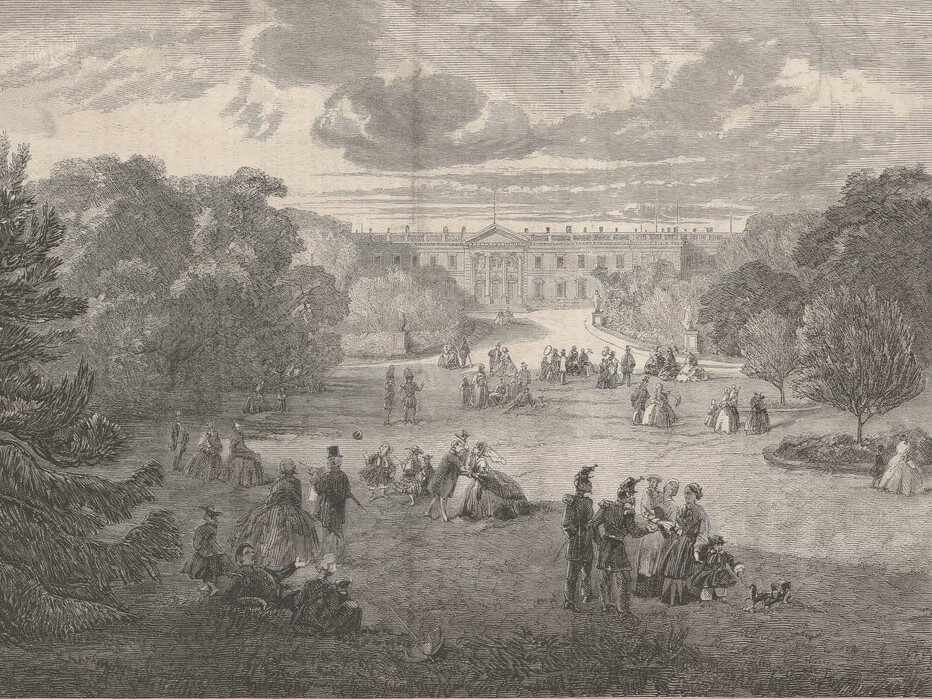
les Séries de Compiègne
The new couple returned to the palace of Compiègne for the first time in October of the same year, then regularly in the autumn from 1856 onwards. With such a large royal palace at their disposal, how better to create alliances, forge links with the elite, and cultivate the arts than with an imperial house party?
These were such a success that they became known as “les Séries de Compiègne”.
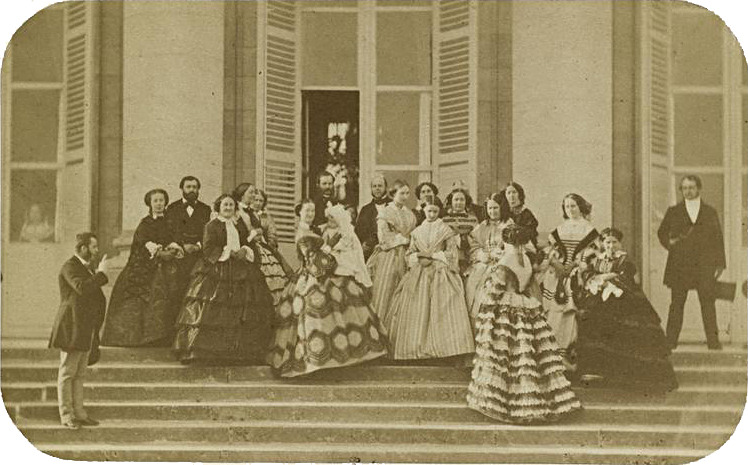
The Series were essentially large house parties of around seventy to one hundred notables. To receive an invitation to a “Série” was the highest of social ambitions. There, artists and musicians mingled with aristocrats and diplomats, writers and bankers shared their opinions with scientists and princesses, and the Emperor and the Empress presided over all. Generally, around four Series were held over October and November each year.
However, accommodating and entertaining around a hundred people required some new arrangements. New apartments were created by reusing the spaces more efficiently and old furniture was reupholstered and made comfortable. The Empress Eugénie personally chose the wallpaper and matching fabrics for each apartment. She had certain salons, such as the music room and the reception room, exquisitely and expensively redecorated to her personal taste.
Only a woman of the world who had become an Empress could have managed to create such a company. No one born a princess could have done it. It required a worldly savoir faire as well as the authority of the throne”
The objective was to create a new atmosphere of courtly sociability. These salons of the Second Empire allowed guests to rub shoulders directly with the sovereigns; conversations and socialising took precedence over protocol unlike in other imperial residences.
So for many, the court of the Second Empire was not only magnificent and royal, it was enjoyable.
They made every effort to make these as enjoyable as possible… it is difficult to express with what kindness and cordiality one was received.
A week in the country
The week began with an invitation.
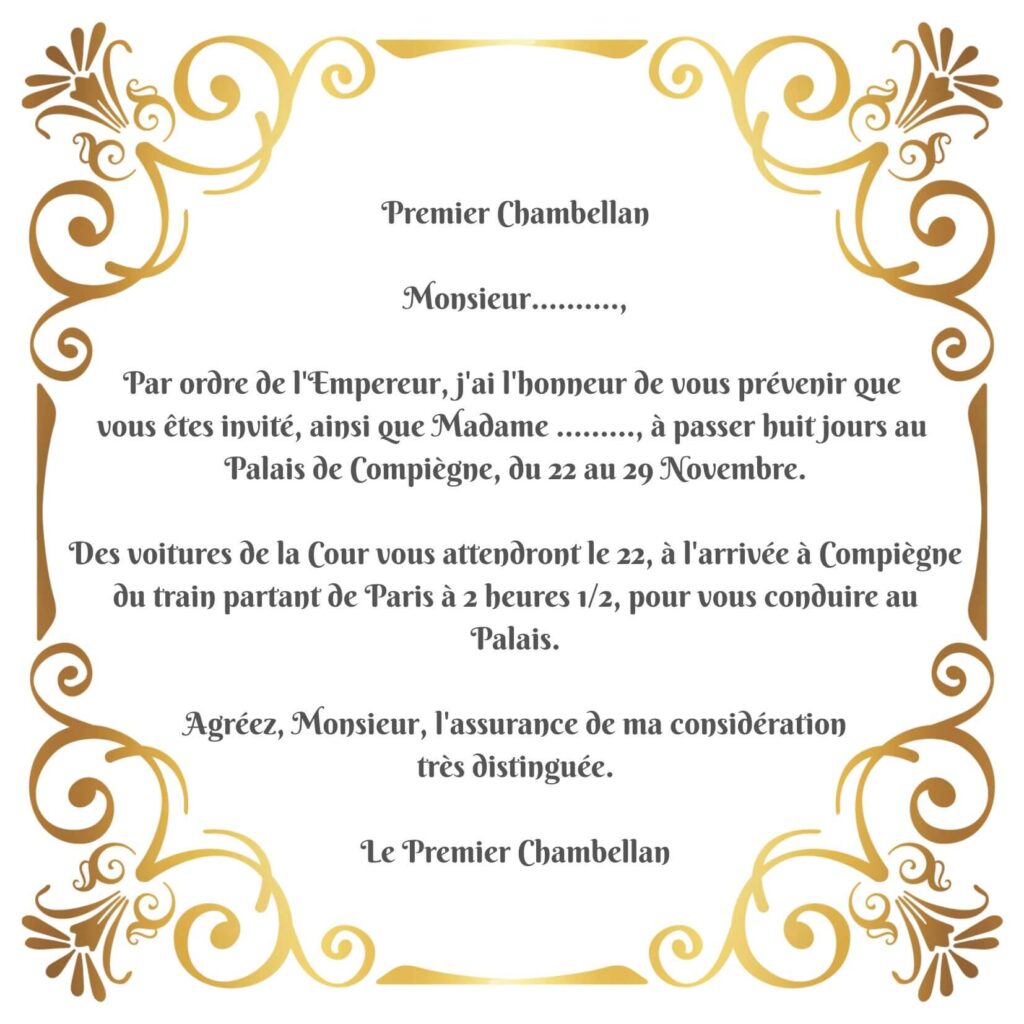
And then the packing. Lillie Moulton, a former singer married to American banker Charles Moulton and one of the in-crowd of the Second Empire, described many of the details of her week long Series in 1866.
I was obliged to have about twenty dresses, eight day costumes (counting my traveling suit), the green cloth dress for the hunt, which I was told was absolutely necessary, seven ball dresses, five gowns for tea.
The specially selected guests were met at Gare St Lazare in Paris, where they boarded a train marked “Extra and Imperial”.
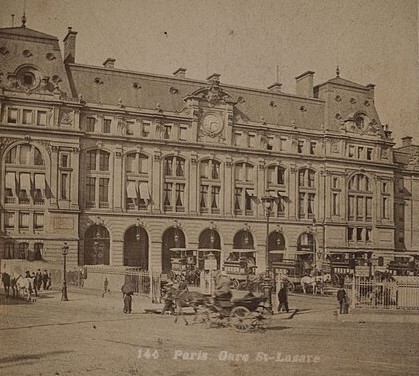
Several large salon carriages with comfortable chairs whisked the invitees at a fast speed to Compiègne; their servants and heavy trunks were in separate carriages behind. As each guest was expected to travel with a servant and suitable clothing for each event over the week, it was a very substantial entourage.
I think the whole twelve thousand inhabitants of Compiègne were gathered there to stare at us, and they did stare persistently, until we had mounted the many equipages waiting for us and had driven away. It certainly must have been very entertaining for them to see the long procession of carriages, the hundreds of trunks, the flurrying maids, and the self-important valets.
Guests were welcomed into the Hall of Columns. With more than 1300 rooms at the chateau of Compiègne it was certainly large enough to house everyone. However, with such a confusing warren of passages and stairways, each guest or couple were allocated a valet entrusted with escorting them to the right place at the right time.
The apartments were allocated in a strict hierarchy by the Empress herself. Those closest to the Imperial apartments were the most prestigious and were designated with a letter A to M, while the others on the second floor or in distant wings were merely distinguished by a number.
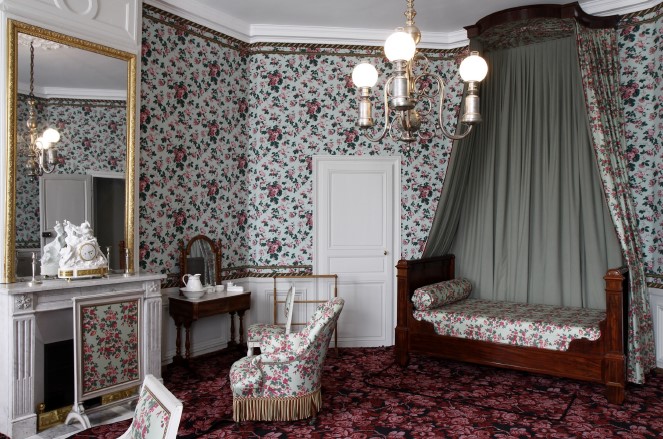
Mrs Moulton, despite having only a number on her door, was very happy with her apartment:
Our names were on the doors, and we entered the brilliantly lighted rooms, which, after our journey, seemed most welcome with their bright fires and cheerful aspect. Tea and chocolate were on the table waiting us, and I regaled myself while the soldiers (who seem to be the men-of-all-work here) brought in the trunks and the maid and valet were unpacking.
We have a large salon, two bedrooms, two servants’ rooms, and an antechamber. In the salon there are two long windows which reach to the floor and overlook the park. The walls are paneled with pink and mauve brocade. The covering of the furniture and the curtains are of the same stuff. My bedroom is furnished in white and green with a delightful chaise longue and large fauteuils, which to me are more inviting than the stiff Empire style of the salon.
For the first night everyone was ceremoniously welcomed by Napoleon and Eugénie, who from then on behaved as host and hostess rather than sovereigns.
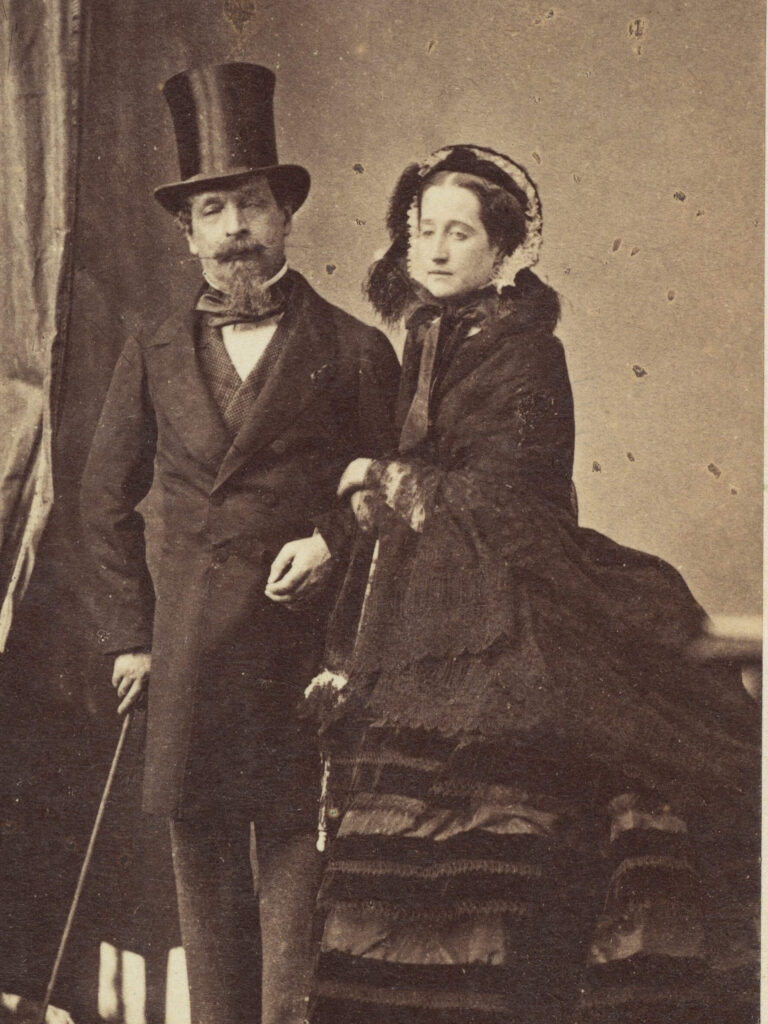
A typical day at the chateau de Compiègne during the “Series’ began with tea, coffee or chocolate and a cold meal if requested brought to each room by a valet. All the valets, similar to an English footman, wore white stockings and powdered wigs, harking back to the dress of the eighteenth century. Dejeuner or lunch was served in the salon at 11am.
Tea with the Empress
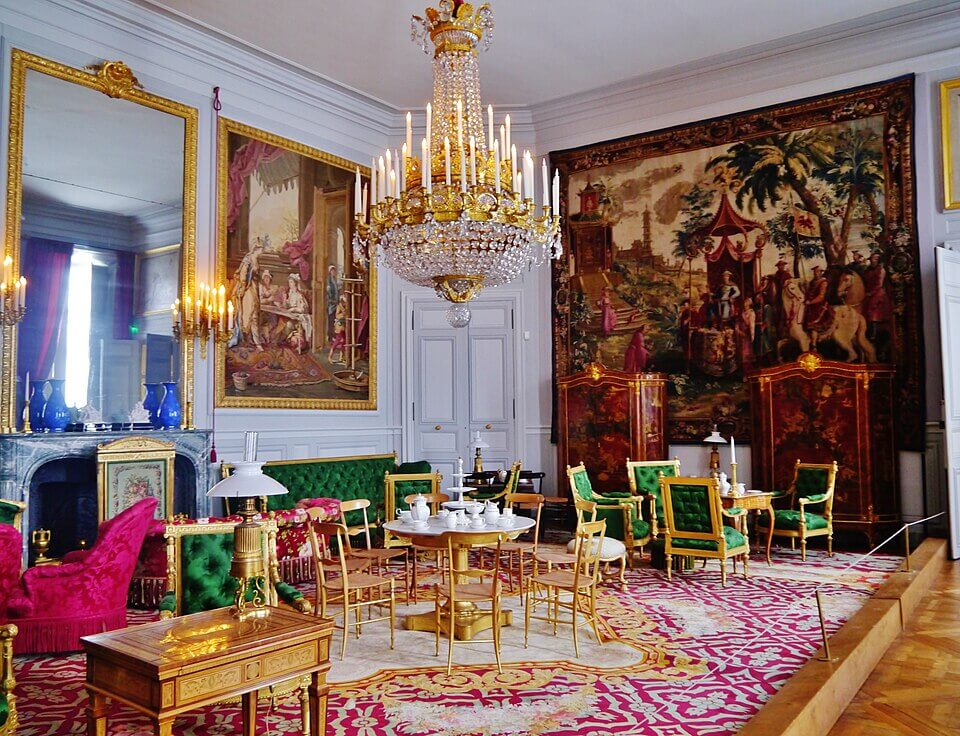
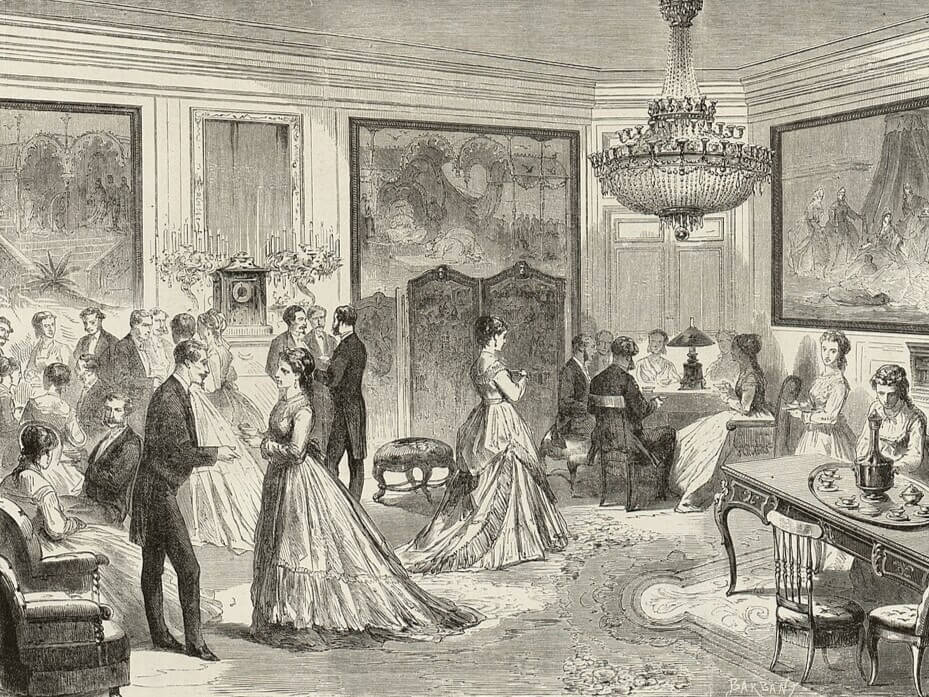
If you were one of a select few, there would be a knock at your door in the late afternoon and the empress’ private huissier would announce “Her Majesty the Empress desires your presence at five o’clock”. To be invited to take tea with the Empress Eugénie in her richly decorated salon was a privilege. A high-necked long silk dress was required for the occasion.
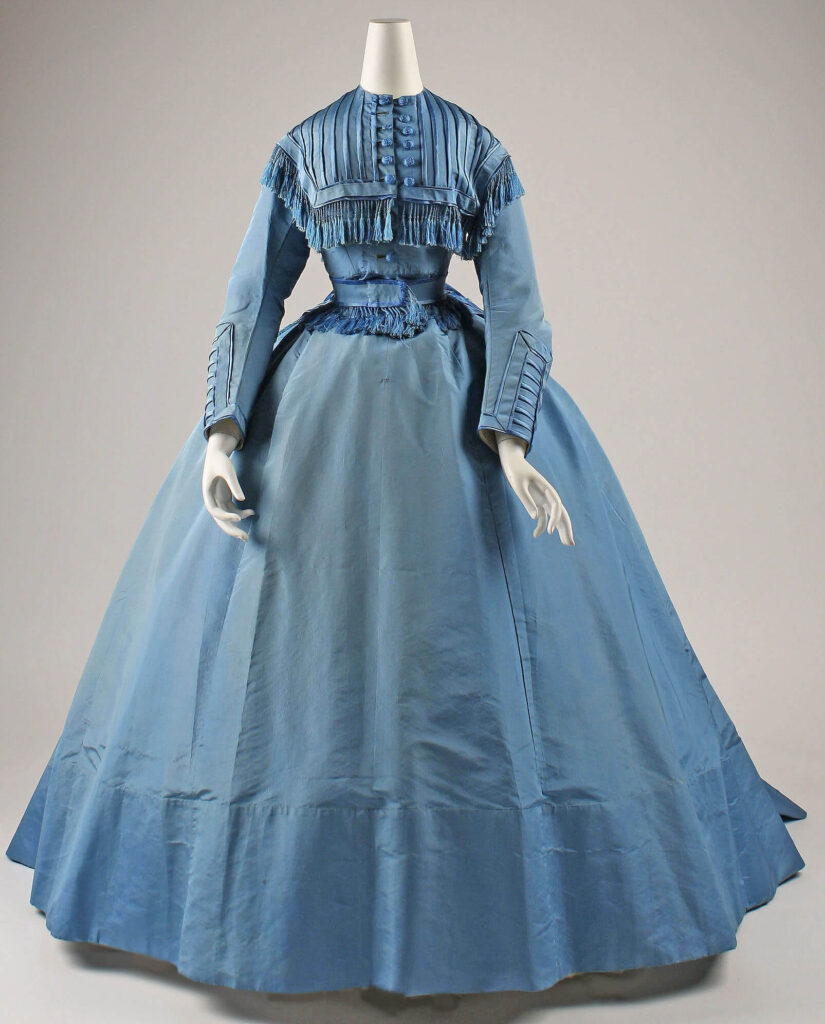
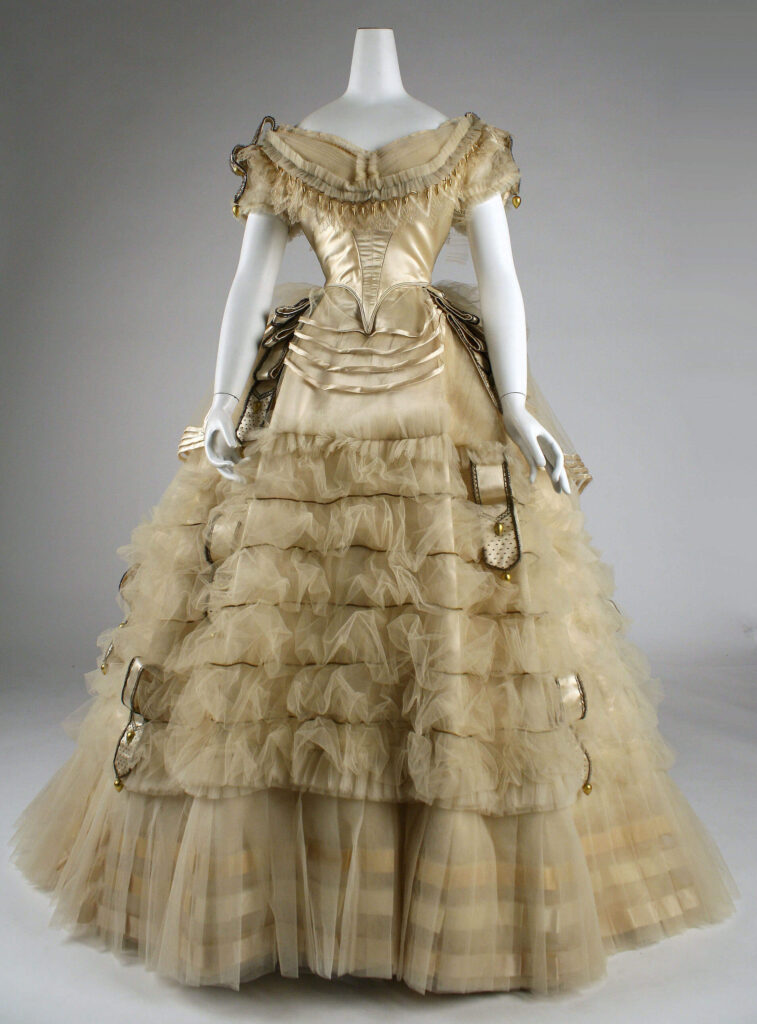
Tea was served in the Salon de Musique, one of the rooms in the Empress’ apartments. It was restored in 2012 and is now called the Salon de Thé (Tea Salon).
Dinner in the Ballroom
Six o’clock was the hour for dressing for dinner, always in ball dress, and then all the party met in the Aides-de-Camp’s Room (now the Map Room). Once all the guests had been placed according to rank, there was a glittering procession through to the Galerie de Bal or Ballroom.
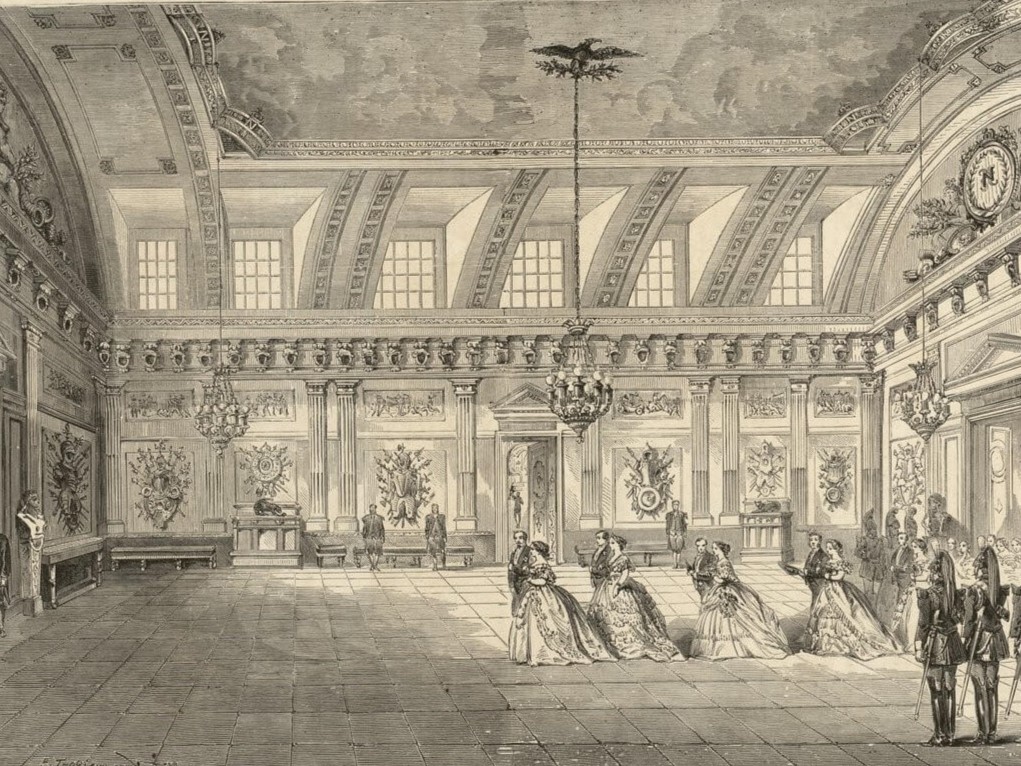
There, a long table set for one hundred shone with Sevres porcelain and fifty valets with powdered hair in red and white livery served dinner. A military band in the courtyard outside the dining-room played throughout the meal. The women’s jewels twinkled, their silk and taffeta dresses reflected the candlelight, and gaiety and sparkling conversation were expected.
A typical dinner menu of more than ten courses included turtle soup, brisotins de foie gras, filet de boeuf, homards à la Parisienne, petits pois à l’anglaise and assorted sorbets.
However, time was not to be wasted so all courses were served and eaten within one hour. Dishes were served “Russian style”, as in a valet served a plate directly, rather than “French style” where dinner guests helped themselves from dishes in the middle of the table. When the Emperor and Empress left the table everyone was also expected to rise and stand to the side as they passed. Chairs were pulled out by the valets at this moment regardless of whether the guest had a spoon halfway to their mouth. One funny story was the diplomat who removed his too-tight shoes at dinner and could not find one of them under the table before his chair was whisked away. His barefoot stance was commented on (kindly) by the Empress as she walked by.
After dinner, there was entertainment, and then tea was served in the Emperor’s salon at eleven. Their Majesties retired for the night soon afterwards. Guests were expected to keep to this schedule.
Fun and games at the château
But aside from these set times, how did the upper classes amuse themselves for a whole week at the Château de Compiègne?
With the breakfast beverages, a daily program was also served. eg Déjeuner à onze heures. Chasse à tir à deux heures. Comédie Française à neuf heures.
A stag hunt was of course the main attraction. In fact, the chateau of Compiégne owes its continued existence to its heavily wooded forests full of game – Louis XIV visited here over 70 times in his 72 year reign.
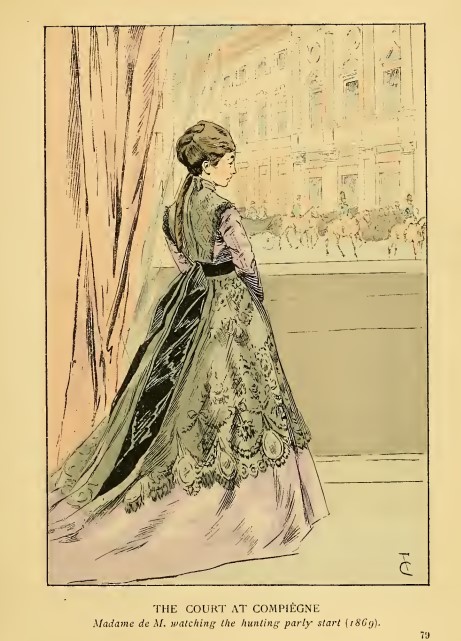
It was usual for two hunts or chasse à courre to occur during the Series. The women were required to wear a green riding suit and the men a red coat, white breeches, a velvet cap and top-boots. The guests could only participate if invited, or watch on horseback or from a carriage. The Emperor gave out to a select few a gold button which guaranteed them life membership of Imperial hunts.
If the hunt went according to plan a stag was run down and killed in time for everyone to return to the palace in time for tea.
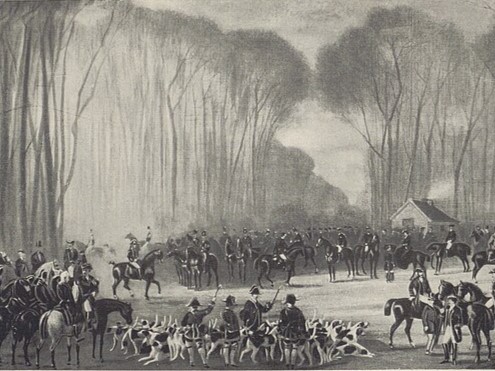
Lillie Moulton was quite horrified at the tradition. As she watched a desperate stag stumble its way through the forest, pursued by a cacophony of barking and firing, she wished for its escape (the stag was killed). She noted in one afternoon that 4000 birds, rabbits and other small animals in total were slaughtered.
Another highlight of each Series was the excursion to the ruins of the nearby Château de Pierrefonds where, usually guided by Imperial architect Viollet-le-Duc, the Emperor and Empress showed their guests around the castle’s construction sites.
In the gardens, beautifully restored under Napoleon I, there was a one thousand metre long trellis which joined the chateau to the forest. Napoleon I, who loved hunting, had insisted on being able to walk through the garden and into the woods without getting wet.
Or if you preferred something quieter there was croquet or archery on the immaculately smooth lawn.
Carriages were always available if someone preferred a drive in the countryside, or one hundred horses to choose from for a ride in the forest.
Lillie Moulton described her attendance at a “mock battle” where real soldiers fired real guns and cannons amidst trumpeters and flags which took place amongst the thickly wooded copses. The house party, clad in their hunting clothes, watched on horseback or from carriages, surrounded by heavy smoke from the gunfire. With victory, the trumpets blasted a grand fanfare and the Prince Imperial, the son of Louis-Napoleon and Eugénie, handed out medals to the victorious side.
A fine performance
Then there were the evenings. One of them was usually devoted to a performance given in the Louis-Philippe theatre by a troupe from a Parisian theatre such as the Comédie-Française, who came to present one of the shows then in vogue in the capital.
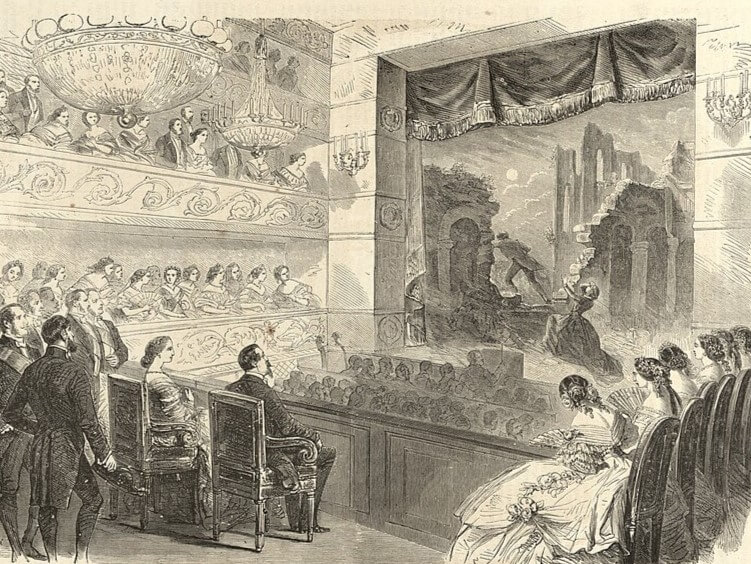
Mrs Moulton noted that the theatre was entirely lit by wax candles, of which she thought there must have been thousands.
The whole assemblage certainly presented the most dazzling and magnificent sight. The ladies in their beautiful toilettes and superb jewels showed to the greatest advantage in this brilliantly lighted theater. The Empress was gorgeous in yellow tulle covered with lace and jewels. She wore the famous Regent diamond, which belongs to the French Crown, in her corsage, and a superb diamond tiara and necklace. Princess Metternich, who is known to be the best dressed lady in Paris, had a black tulle dress embroidered in gold; she wore a tiara of diamonds and emeralds and a necklace of the same.
Other evenings might be enlivened by amateur performances put on by the guests on a small portable stage set up at the back of the Emperor’s dining room. Tableaux vivants, charades, parodies, and plays were then staged by Viollet-le-Duc, who also acted as set designer and prompter for the occasion. Finally, ordinary evenings were spent in the salons, where guests returned after dinner. The Card Room welcomed guests who wish to play (cards, shuffleboard, Japanese billiards) or dance to the sound of a mechanical piano, while the Family Room, where the Empress usually sat, offered refreshments and a calmer atmosphere more conducive to conversation.
A who’s who of the Second Empire
Lillie Moulton was fascinated by the company she kept during the week of the Series in 1866. One night she sat next to the poet Théophile Gautier who later sent her a poem; she made friends with the Marquis de Gallifet who was the most dashing cavalry colonel in the entire French army; she was taken into lunch by Baron Haussmann, the great rebuilder of Paris; and at the final lunch Gustave Doré passed around the table an album of caricatures he had drawn during the week, with a “sketch of her Majesty driving a chariot” (their Majesties were not amused by this one).
The guests may have been treated to a week of luxury, but were expected to leave a pourboire, or tip. Mrs Moulton was quite astonished that her “bill” amounted to 600 francs, which converts to more than 3000 euros today!
The end of “Les Séries”
The following year when Lillie Moulton was invited once again, her father-in-law forbid it due to the high cost of her dresses and such, as well as the pourboire. However, the emperor, when learning of the negative accounts of this practice, banned all tipping and Mrs Moulton was specially re-invited.
However, there were not to be many more Series after this. Not only was the Emperor quite ill by 1870, but the the Franco-Prussian war broke out in the same year and by 1871 he had been deposed. The Second Empire and the Napoleon dynasty were over.
The château de Compiègne would never be a royal or imperial residence again. However, it has been beautifully restored to the era of Louis-Napoleon and Eugénie, and should most definitely be visited.
Here is the official website of the Château de Compiègne
Please note that some of the links on this page lead to Get Your Guide. As an affiliate member, if you purchase a ticket to any of the places using these links I may receive a (very) small commission.
What do you think about Les Séries? Would you have liked to spend time with the Emperor and Empress? Feel free to leave your comment below!